01
A managing director who is a provider himself
Reiner Korneffel co-manages two youth welfare facilities. Whoever speaks with us speaks with an active practitioner — not a sales channel.
Husby · operating since 1998
Social facilities often wait weeks for payments from their funding bodies. With Korneffel Social-Factoring, you usually receive your money within 48 hours — securely, transparently, without long-term contractual commitment. An industry solution born of more than three decades of hands-on experience in the social sector.
Prefer to call directly? +49 (0)4634 9367970Many offer liquidity. What defines us is the combination of industry DNA, our own experience as a provider and a software background — right at the table.
Reiner Korneffel co-manages two youth welfare facilities. Whoever speaks with us speaks with an active practitioner — not a sales channel.
Founder of Daarwin GmbH and creator of the QM-Center, which has been established in youth welfare software for 25 years. Today, the KoJu24 software offers specialized software for youth welfare from the same house. We understand process bottlenecks technically, not just commercially.
RHD AG is an independent Hanseatic factoring company headquartered on Am Wall — no FinTech vehicle, no bank-subsidiary construct. A personal contact instead of a call center.
Providers that come to us through Korneffel Beratung or KoJu24 receive negotiated preferential terms. The dual relationship of consulting + factoring reduces the overall effort.
You focus on your educational work — we take care of the rest. From the receipt of the invoice to the credit on your account, it usually takes around 48 hours.
You prepare your cost invoice for the educational services rendered as usual — directly from your specialist software such as KoJu24 if you wish.
You send the invoice to RHD Rechnungsstelle AG — conveniently by upload in the client portal or by mail. Encrypted and DSGVO-compliant.
The full invoice amount is usually transferred to you within 48 hours. RHD then takes over communication with the funding body.
Important: You don't commit long-term — there is no minimum contract term and no minimum fee. We'll discuss what a non-binding start can look like for you in the free initial consultation.
More than just fast liquidity: you reduce administrative burdens, create planning certainty and free up space for what really matters — your clients.
Instead of waiting 30, 60 or even 90 days for payment from your youth welfare offices and funding bodies, the money is usually in your account after 48 hours. Planning certainty on a daily basis.
— Cash flowNo monitoring of incoming payments. No chasing after the economic youth welfare department by phone. An experienced team with a Hanseatic feel for sensitive communication handles this for you.
— ReliefYour invoices are mostly addressed to public funding bodies such as youth and social welfare offices — genuine payment defaults there are the absolute exception. Outstanding receivables are handled professionally and transparently, and you keep an overview of their status at all times.
— SecurityThe payout pays down your credit line. The interest on it ceases and the facility is available again — as a reserve for genuine exceptional situations rather than a permanent fix for payment terms.
— LiquidityIn the event of a change of owner or a generational handover, the pre-financing of receivables provides plannable liquidity during the transition — a sensible building block of sound succession plans, complementing existing bank financing.
— FutureA clear percentage-based processing fee. No minimum fee, no hidden costs, no contract term. You only pay when you actually submit an invoice.
— FairnessMove the sliders and instantly see how much liquidity you gain, what it costs — and how many administrative hours you save per month.
*Assumption: €45 internal full cost per hour of administrative work. All values are model calculations and do not replace an individual offer. The final fee depends on volume, the number and size of the individual invoices and the chosen factoring method. We would be happy to prepare a binding calculation based on your actual data.
Every financing instrument has its legitimate place. For ongoing liquidity management in the social sector, however, a clear picture emerges.
| Criterion | Social-Factoring | Bank current account | KfW loan |
|---|---|---|---|
| Payout after application | usually 48 hours | usually 1–4 weeks | usually 10–14 business days |
| Creditworthiness check of your own company | usually not required | extensive | extensive |
| Receivables management included | |||
| Contract term | no minimum term | terminable annually | 5–20 years repayment |
| Balance sheet impact | liability | liability | long-term liability |
| Collateral required | the receivable itself | often secured by liens | often secured by liens |
| Scaling with growth | automatic | only through renegotiation | fixed limit |
| Suitable for | ongoing liquidity, working capital | short-term bottlenecks | investments, fixed assets |
The instruments are not mutually exclusive — quite the opposite. Many of our clients combine Social-Factoring for day-to-day operations with a KfW loan for investments in new locations. We will advise you on the right structure.
There are three types of factoring providers that a social-sector provider will encounter. Here they are in direct comparison — deliberately without naming names, because the categories say far more about the depth of industry expertise than individual brands do.
| Korneffel × RHD | FinTech platform | Traditional factoring bank | |
|---|---|---|---|
| Industry expertise in the social sector | own provider experience since 1998, software background (QM-Center) | generic, industry-agnostic | mostly focused on trade, industry, logistics |
| Dedicated point of contact | dedicated contact at RHD plus Korneffel consulting | self-service portal, chat support | sometimes rotating account managers in the large corporation |
| Communication with the youth welfare office / social welfare office | confident, professionally fluent, sensitive | standard dunning/debt collection, often unsuitable for funding bodies | legally correct, but not attuned to the social sector |
| Contract term | no minimum term, no minimum fee | often a monthly minimum fee from account opening | typically 12–24 months minimum commitment |
| Minimum monthly volume | no rigid lower limit — case-by-case assessment | often from €50,000/month | often from €250,000/month upwards |
| Software integration | native KoJu24 interface, other specialist software on request | API-first, mostly without industry connectors | mostly Excel/DATEV export, no link to specialist software |
| Consulting beyond factoring | strategy, succession, concept (Korneffel) | none | usually cross-selling of other banking products |
Note: The comparison above is based on publicly available market information and insights gained from consulting discussions. It is not intended as an assessment of individual competitors, but as an honest positioning of what we do differently.
Social-Factoring is not a standard product. It has grown out of 30+ years of experience with the specific billing logics, legal foundations and pitfalls of the social sector. Suitable for small to large providers.
§§27, 34, 35, 35a, 41 SGB VIII — residential homes, residential groups, intensive educational facilities, outpatient support.
SGB IX — special forms of housing, assistance services, day support centers, outpatient assisted living.
Interdisciplinary early intervention centers, family centers, low-threshold services under SGB VIII / SGB IX.
One-to-one school support, inclusion assistance, youth social work under §13 SGB VIII.
Social-psychiatric centers, assisted living for people with mental illness, crisis services.
Outpatient care services, day care, assisted living for seniors, shared-care apartments.
Probation services, offender support, assistance for released prisoners and reintegration projects.
Providers of vocational training and continuing education, rehabilitation facilities, workshops for people with disabilities.
Your sector isn't listed? Get in touch — we'll review your individual situation.
Have your industry fit reviewedIllustrative example scenarios that reflect typical starting situations in the social sector — not real individual cases. Specific, approved case studies including the provider's name will follow once the respective facility has consented to publication.
Independent provider §§34, 35a SGB VIII · ~45 employees
In a constellation like this, the switch can typically be implemented within a few business days; the planning certainty gained can make it easier to invest in things such as additional staff positions.
Recognized provider §75 SGB IX · 120 employees
Instead of waiting out the BTHG-related payment delay, the provider usually receives the invoice amount pre-financed within 48 hours — keeping staff and operating costs plannable, especially during BTHG-related transition phases.
Non-profit association · 12 freelance staff, 4 permanent positions
A model example showing that smaller providers can benefit too — no minimum fee, no minimum term, short setup time.
Note: The scenarios above are illustrative model examples and do not reflect real individual cases. Specific case studies released under their actual names will be added here once the respective providers have consented to publication.
Korneffel Social-Factoring is the established partnership between two specialized firms: a consultancy with three decades of hands-on experience in the German social sector — and a Hanseatic financial services provider that grew out of an experienced billing specialist in the healthcare sector.
What this means for you: you talk to people who understand the technical terms of your everyday work — from specialist service hours and § 36 assistance plans to ICF classification. And you work with a factor that handles communication with funding bodies professionally, sensitively and confidently. A combination that, at this depth, is unusual in the German social sector.
Beratungs- und Beteiligungsgesellschaft mbH · Husby (Schleswig-Holstein)
Reiner Korneffel — managing partner, co-director of two youth welfare facilities and active in the digitalization of the social sector since 1998.
As founder of Daarwin GmbH, he developed an established solution for documentation, billing and quality management in youth welfare and disability support services with the QM-Center software — still used today by providers across the German-speaking region (Germany, Austria, Switzerland, Luxembourg). Daarwin GmbH is now part of the myneva group.
korneffel-beratung.de besuchenFactoring partner with Hanseatic roots · Am Wall, Bremen
RHD Rechnungsstelle AG was founded in 2014 as a subsidiary of AS Abrechnungsstelle AG — an established specialist in service billing in the healthcare sector — and has been an independent public limited company headquartered Am Wall in Bremen since 2016.
RHD brings what banks often lack: specialization in factoring, a genuine understanding of pre-financing flows, personal contacts instead of call centers — and Hanseatic reliability when it comes to sensitive communication with funding bodies.
rhd-bremen.de besuchenTwo personalities, one shared ambition: technical depth and financial soundness for the social sector.
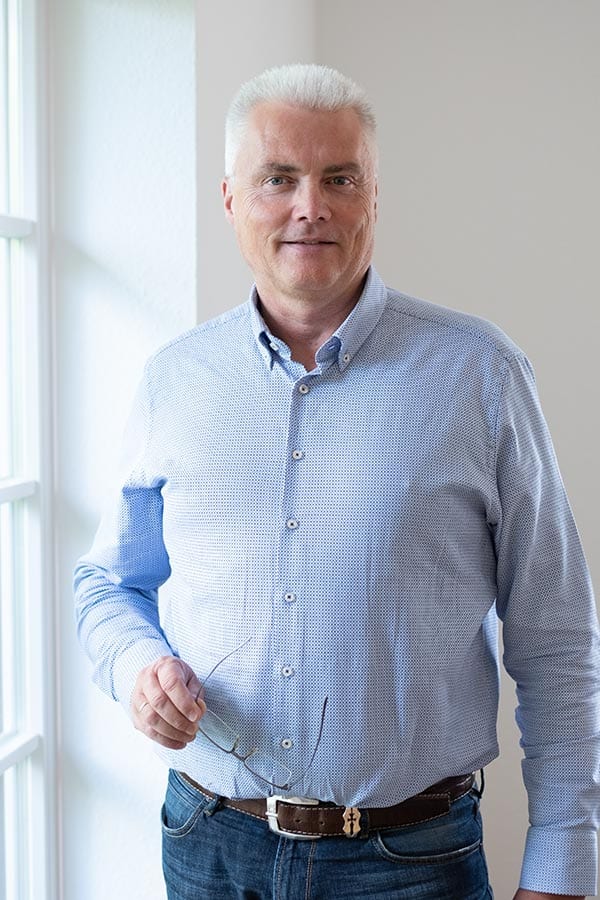
„Connected thinking shapes our holistic approach in the field of social services.“
Reiner Korneffel is Managing Director of Korneffel Beratungs- und Beteiligungsgesellschaft mbH, headquartered in Husby. More than three decades of experience in the social sector — particularly in youth welfare, disability support services and senior housing projects — shape his work. His approach: not just to advise, but, on request, also to get operationally involved.
Within the Korneffel Social-Factoring network, he represents the technical side — that is, everything that goes beyond pure liquidity: new ventures, business succession, strategy and financial consulting, and conceptual work.
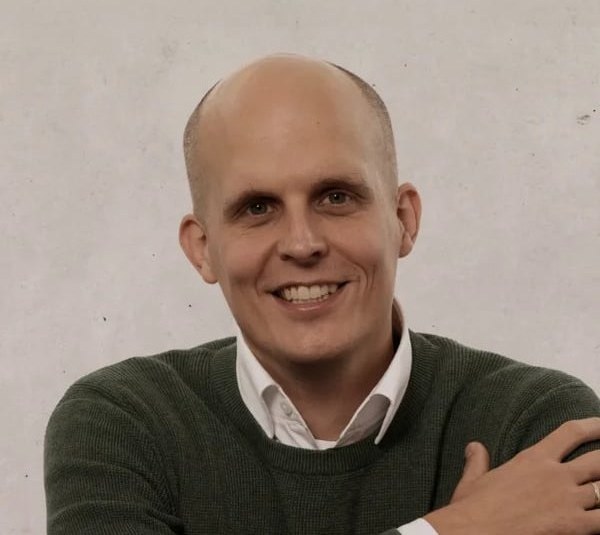
„Liquidity is not just money in the account — it is the prerequisite for good work.“
Gunnar Neumahr has been a board member of RHD Rechnungsstelle AG in Bremen since 1 July 2022. He combines the solid craftsmanship of a trained bank clerk with the strategic foresight of a graduate economist.
In the partnership with Korneffel Social-Factoring, Gunnar Neumahr represents the financial side. He understands the particular concerns of the social sector — from the typical payment behavior of youth welfare offices to the BTHG-related adjustments in disability support service structures.
Social-Factoring is one building block in a much broader offering. Anyone seeking consulting, software, or project partnership will find suitable answers within the Korneffel environment — all from a single source, from Husby.
Strategic consulting, succession planning, new ventures, senior housing projects and investments. More than three decades of industry experience — on request, also operationally with our own stake.
The cloud-based, modularly rentable software platform for administrative and educational processes in social facilities. With documentation, billing, medication, and rights management — GDPR-compliant on German servers.
An industry solution for immediate liquidity in the social sector. A cooperation between Korneffel Beratung and RHD Rechnungsstelle AG from Bremen — with special terms for providers coming from the Korneffel network.
People at the center, technology as a tool. — The corporate maxim that shapes everything we do within the Korneffel group.
We don't believe in mass acquisition. If the setup isn't a fit, we say so — before signing the contract, not after.
Social-Factoring pays off when receivables are owed by reliable public funding bodies. With a high private-payer share, conventional dunning is often cheaper — we say so openly.
The prerequisite is verifiable assistance-plan or service billing with clear allocations. Anyone still billing by hand or via Word tables should first get their bookkeeping in order — we are happy to help with that through Korneffel Beratung, but factoring comes afterwards.
For a bottleneck of a few weeks, a current account or a KfW quick loan is often more pragmatic. Factoring is worthwhile when the payout delay is structural and recurring.
We are not the app where you handle everything with a click. Our aim is personal consulting — that means phone calls, questions, sometimes appointments. Anyone who doesn't want that is better served by pure self-service platforms.
Answers to the most frequently asked questions about Social-Factoring in the social sector.
You prepare your cost invoice to the funding body as usual (e.g. youth welfare office, social welfare office, disability support services provider). You then transfer this invoice to RHD Rechnungsstelle AG — by post or via the customer portal. Typically within 48 hours, the full invoice amount (less the processing fee) is credited to you. RHD then takes over communication with the funding body and the dunning process.
On the contrary — the principle is over 4,000 years old and goes back to the Babylonians. In Germany, according to the Deutscher Factoring-Verband e. V., more than 90,000 companies with a combined turnover of over €275 billion use this form of financing. The only new aspect is its industry-specific application to the social sector.
Yes, the feedback is consistently positive. What matters is a professional, sensitive approach with the case worker in the financial youth welfare department. The only change for the funding body is a change of payee. This process is clearly governed by law (assignment of receivables under § 398 BGB) and works without issues in practice.
You pay a percentage of the invoice amount as a processing fee. The exact amount is determined by your monthly volume, the number and size of the individual invoices and the chosen factoring method. We calculate the terms individually — there is no minimum fee and no hidden costs.
Yes. As a rule, the processing fee constitutes a business expense and can therefore reduce your tax burden; the specific tax treatment depends on the individual case. For non-profit providers, the usual rules apply — we are happy to advise you on the proper accounting treatment within each area of activity (special-purpose operation vs. commercial business operation).
With bank and KfW loans, your creditworthiness as the applicant is assessed — with factoring, it is the creditworthiness of the funding body that counts. Since youth welfare offices, social welfare offices and disability support services providers, as municipal or state authorities, have excellent creditworthiness, approval is generally straightforward. In addition, with factoring, receivables management is included as a service — something you get neither from a bank nor from KfW.
As a rule, the collaboration can start within 24 hours of signing the contract. This is preceded by the free initial consultation (approx. 30 minutes), the submission of a manageable number of standard documents (operating licence, excerpt from the commercial register, and if applicable the recognition notice as an independent provider) and the preparation of your individual offer.
There is no minimum contract term. We win you over with our service — not with clauses. In the free initial consultation we'll discuss how you can start without obligation and decide at your leisure whether it suits your organization.
The RHD team first makes personal telephone contact with the contact person in the financial youth welfare department and requests a review. Only after a deadline has passed without success is a written reminder sent. As the receivables are predominantly owed by public funding bodies, genuine payment defaults are the absolute exception.
RHD provides you at all times with transparent statements of outgoing invoices, costs incurred and any outstanding amounts — either in the online customer portal or as statements. This gives you a better overview than before, because all data is available centrally and updated daily.
Yes, explicitly also for small providers. Since there is no minimum fee, the solution is attractive even for individual practices, small residential groups or outpatient services. For larger providers with multiple locations, the procedure automatically scales with the growing volume.
In non-recourse ('echtes') factoring, the factor assumes the default risk (del credere function); in recourse ('unechtes') factoring, that risk remains with the seller of the receivables. Social-Factoring via RHD is a pre-financing of your receivables — the default risk fundamentally remains with you. In the social sector this barely matters, because the debtors are predominantly municipalities and state authorities and genuine defaults are the absolute exception.
All transmissions are encrypted, the customer portal is DSGVO-compliant (GDPR) and hosted in German data centers. RHD AG has been processing sensitive financial and billing data for years, including in the highly sensitive healthcare market.
Yes — as a sister product of Korneffel Beratung, KoJu24 is optimally aligned with the Social-Factoring workflow. Cost invoices generated in KoJu24 can be prepared directly for transmission to RHD. The accounting data flows cleanly back into your financial accounting.
Tell us about your situation. We will get back to you within 24 hours on business days with an initial assessment.
We will get back to you within 24 hours on business days with an initial assessment.
Korneffel Beratungs- und Beteiligungsgesellschaft mbH
Flensburger Straße 12
24975 Husby
Deutschland
Reiner Korneffel, Geschäftsführer
Telefon: +49 4634 9367970
Fax: +49 4634 9367972
E-Mail: info@social-factoring.de
Eintragung im Handelsregister
Registergericht: Amtsgericht Flensburg
Registernummer: HRB 12387 FL
Umsatzsteuer-Identifikationsnummer gemäß §27a UStG: DE 312849322
Reiner Korneffel, Flensburger Straße 12, 24975 Husby
Die Factoring-Dienstleistungen werden in Kooperation mit der
RHD Rechnungsstelle AG
Am Wall 96–98, 28195 Bremen
Telefon: +49 421 399 128 100
Web: www.rhd-bremen.de
erbracht.
Die Inhalte unserer Seiten wurden mit größter Sorgfalt erstellt. Für die Richtigkeit, Vollständigkeit und Aktualität der Inhalte können wir jedoch keine Gewähr übernehmen. Als Diensteanbieter sind wir gemäß § 7 Abs. 1 DDG für eigene Inhalte auf diesen Seiten nach den allgemeinen Gesetzen verantwortlich.
Wir sind nicht bereit oder verpflichtet, an Streitbeilegungsverfahren vor einer Verbraucherschlichtungsstelle teilzunehmen (§ 36 VSBG).
Der Schutz Ihrer personenbezogenen Daten ist uns ein zentrales Anliegen. Nachfolgend informieren wir Sie über Art, Umfang und Zwecke der Verarbeitung personenbezogener Daten im Zusammenhang mit dieser Website und unseren Leistungen.
Verantwortlicher im Sinne der Datenschutz-Grundverordnung (DSGVO) und sonstiger nationaler Datenschutzgesetze ist:
Korneffel Beratungs- und Beteiligungsgesellschaft mbH
Flensburger Straße 12, 24975 Husby, Deutschland
Vertreten durch den Geschäftsführer Reiner Korneffel
Telefon: +49 4634 9367970 · Telefax: +49 4634 9367972 · E-Mail: info@social-factoring.de
Bei Fragen zum Datenschutz erreichen Sie uns jederzeit unter den vorstehenden Kontaktdaten.
Wir verarbeiten personenbezogene Daten grundsätzlich nur, soweit dies zur Bereitstellung einer funktionsfähigen Website sowie unserer Inhalte und Leistungen erforderlich ist — regelmäßig nur nach Einwilligung oder soweit die Verarbeitung gesetzlich gestattet ist. Personenbezogene Daten sind alle Informationen, die sich auf eine identifizierte oder identifizierbare natürliche Person beziehen (Art. 4 Nr. 1 DSGVO). Rechtsgrundlagen der Verarbeitung sind insbesondere: Art. 6 Abs. 1 lit. a DSGVO (Einwilligung), lit. b (Vertrag bzw. vorvertragliche Maßnahmen), lit. c (rechtliche Verpflichtung) und lit. f (Wahrung berechtigter Interessen, sofern Ihre Interessen nicht überwiegen).
Diese Website wird bei einem externen Dienstleister gehostet: HostPress GmbH, Bahnhofstraße 34, 66571 Eppelborn (Auftragsverarbeiter nach Art. 28 DSGVO). Bei jedem Aufruf erfasst der Server automatisiert Daten in Logfiles: IP-Adresse, Datum und Uhrzeit des Zugriffs, Browsertyp und -version, Betriebssystem sowie die zuvor besuchte Seite (Referrer). Rechtsgrundlage ist unser berechtigtes Interesse an einem stabilen, sicheren und störungsfreien Betrieb (Art. 6 Abs. 1 lit. f DSGVO). Die Speicherung und Verarbeitung erfolgt ausschließlich in Rechenzentren in Deutschland.
Wenn Sie uns über das Kontaktformular oder das Online-Terminbuchungs-Modul Anfragen zukommen lassen, werden Ihre Angaben (Name, Einrichtung, E-Mail, Telefon, Bereich, Volumen, Nachricht bzw. gewünschter Termin) zwecks Bearbeitung der Anfrage und für den Fall von Anschlussfragen bei uns gespeichert. Rechtsgrundlage ist Art. 6 Abs. 1 lit. b DSGVO (Vertragsanbahnung) bzw. Art. 6 Abs. 1 lit. f DSGVO (berechtigtes Interesse an effizienter Kommunikation).
Technischer Übertragungsweg: Wenn Sie eines unserer Formulare absenden, werden Ihre Eingaben verschlüsselt (TLS) an einen Endpunkt auf unserem eigenen Webserver übertragen und dort zu einer E-Mail verarbeitet. Diese E-Mail wird anschließend über den authentifizierten Postausgangsserver (SMTP) unseres E-Mail-Anbieters Microsoft 365 (Microsoft Ireland Operations Ltd., Dublin, Irland) an unser Postfach info@social-factoring.de zugestellt. Sowohl unser Hosting-Anbieter HostPress GmbH, Eppelborn als auch der E-Mail-Anbieter verarbeiten dabei in unserem Auftrag personenbezogene Daten; mit beiden besteht ein Vertrag zur Auftragsverarbeitung gemäß Art. 28 DSGVO. Microsoft ist unter dem EU-US Data Privacy Framework zertifiziert. Eine Weitergabe an sonstige Dritte findet nicht statt.
Die über das Terminbuchungs-Modul vereinbarten Erstgespräche führen wir telefonisch oder per Videokonferenz durch. Für Videokonferenzen setzen wir Microsoft Teams (Microsoft Ireland Operations Ltd., Dublin) ein; dabei werden die zur Durchführung erforderlichen Daten (z. B. Name, Audio-/Videodaten, Chatinhalte) verarbeitet. Mit dem Anbieter besteht ein Auftragsverarbeitungsvertrag nach Art. 28 DSGVO; der Anbieter ist unter dem EU-US Data Privacy Framework zertifiziert. Rechtsgrundlage ist Art. 6 Abs. 1 lit. b bzw. lit. f DSGVO.
Im Rahmen unseres Factoring-Angebots werden personenbezogene Daten (insbesondere Rechnungsdaten, Kommunikationsdaten) gemeinsam mit unserem Kooperationspartner RHD Rechnungsstelle AG, Am Wall 96–98, 28195 Bremen, zur Erfüllung des Factoring-Vertrags verarbeitet. Rechtsgrundlage ist Art. 6 Abs. 1 lit. b und f DSGVO.
Eine Weitergabe Ihrer Daten erfolgt nur an sorgfältig ausgewählte Auftragsverarbeiter (insbesondere Hosting und E-Mail-Zustellung) auf Grundlage von Art. 28 DSGVO, an unseren Kooperationspartner RHD Rechnungsstelle AG zur Erfüllung des Factoring-Vertrags sowie an öffentliche Stellen, soweit eine gesetzliche Verpflichtung besteht. Eine Übermittlung zu Werbezwecken findet nicht statt. Eine Übermittlung in Drittländer außerhalb der EU/des EWR erfolgt nur, soweit ein Angemessenheitsbeschluss besteht oder geeignete Garantien (insbesondere Standardvertragsklauseln, DPF-Zertifizierung) vorliegen bzw. Sie eingewilligt haben.
Diese Website verwendet ausschließlich technisch notwendige Cookies bzw. lokale Speicherung zur Sicherstellung der Funktionalität. Es findet kein werbliches Tracking statt. Eine Einwilligung im Sinne des § 25 Abs. 1 TDDDG ist daher nicht erforderlich. Sollten künftig einwilligungsbedürftige Dienste hinzukommen, holen wir Ihre ausdrückliche Einwilligung vorab ein und passen diese Erklärung entsprechend an.
Personenbezogene Daten werden nur so lange gespeichert, wie es für die Erbringung der Leistung bzw. zur Erfüllung gesetzlicher Aufbewahrungspflichten (insbesondere § 257 HGB, § 147 AO — bis zu zehn Jahre) erforderlich ist. Anschließend werden die Daten gelöscht oder gesperrt.
Ihnen stehen im Rahmen der gesetzlichen Voraussetzungen folgende Rechte zu:
Zur Ausübung Ihrer Rechte genügt eine formlose Mitteilung an die unter Ziffer 1 genannten Kontaktdaten.
Sofern die Verarbeitung Ihrer personenbezogenen Daten auf Art. 6 Abs. 1 lit. e oder lit. f DSGVO beruht — wie insbesondere bei der Bearbeitung einer Anfrage über unser Kontakt- oder Terminformular —, haben Sie das Recht, aus Gründen, die sich aus Ihrer besonderen Situation ergeben, jederzeit Widerspruch gegen diese Verarbeitung einzulegen. Legen Sie Widerspruch ein, verarbeiten wir Ihre personenbezogenen Daten nicht mehr, es sei denn, wir können zwingende schutzwürdige Gründe für die Verarbeitung nachweisen, die Ihre Interessen, Rechte und Freiheiten überwiegen, oder die Verarbeitung dient der Geltendmachung, Ausübung oder Verteidigung von Rechtsansprüchen.
Unbeschadet anderweitiger Rechtsbehelfe steht Ihnen ein Beschwerderecht bei einer Datenschutz-Aufsichtsbehörde zu. Die für uns zuständige Aufsichtsbehörde ist das Unabhängige Landeszentrum für Datenschutz Schleswig-Holstein (ULD), Holstenstraße 98, 24103 Kiel, Telefon: +49 431 988-1200, E-Mail: mail@datenschutzzentrum.de.
Wir treffen geeignete technische und organisatorische Maßnahmen, um Ihre Daten gegen Verlust, Manipulation und unberechtigten Zugriff zu schützen. Die Datenübertragung auf dieser Website erfolgt verschlüsselt über SSL/TLS. Eine verschlüsselte Verbindung erkennen Sie am „https://" bzw. dem Schloss-Symbol in der Adresszeile Ihres Browsers.
Diese Datenschutzerklärung hat den Stand Juni 2026. Durch die Weiterentwicklung unserer Website und Angebote oder aufgrund geänderter gesetzlicher bzw. behördlicher Vorgaben kann es notwendig werden, sie anzupassen. Die jeweils aktuelle Fassung können Sie jederzeit auf dieser Seite abrufen.